Interoception and Bodywork: Helping Clients Learn to Listen to Their Bodies
I remember a client I worked with years ago who had very little awareness of what was happening inside his body—or even where his body was in space.
In other words, both his interoception and proprioception were limited.
At one point, I gave him a very simple exercise: lie on the floor with his arms out to his sides.
I demonstrated it several times. I explained verbally—and even in writing—that the purpose was to gently create length across his chest, allow more freedom in his breathing, and encourage external rotation at the shoulder joints.
And still, the exercise remained somewhat mysterious to him.
At the time, I didn't understand something I understand much better now:
I was asking him to notice sensations he may not have learned how to notice. I was giving him the exercise, but I wasn't helping him develop the internal awareness that would allow him to experience the exercise differently. This internal awareness is the powerful and often overlooked interoception.
What Is Interoceptio...
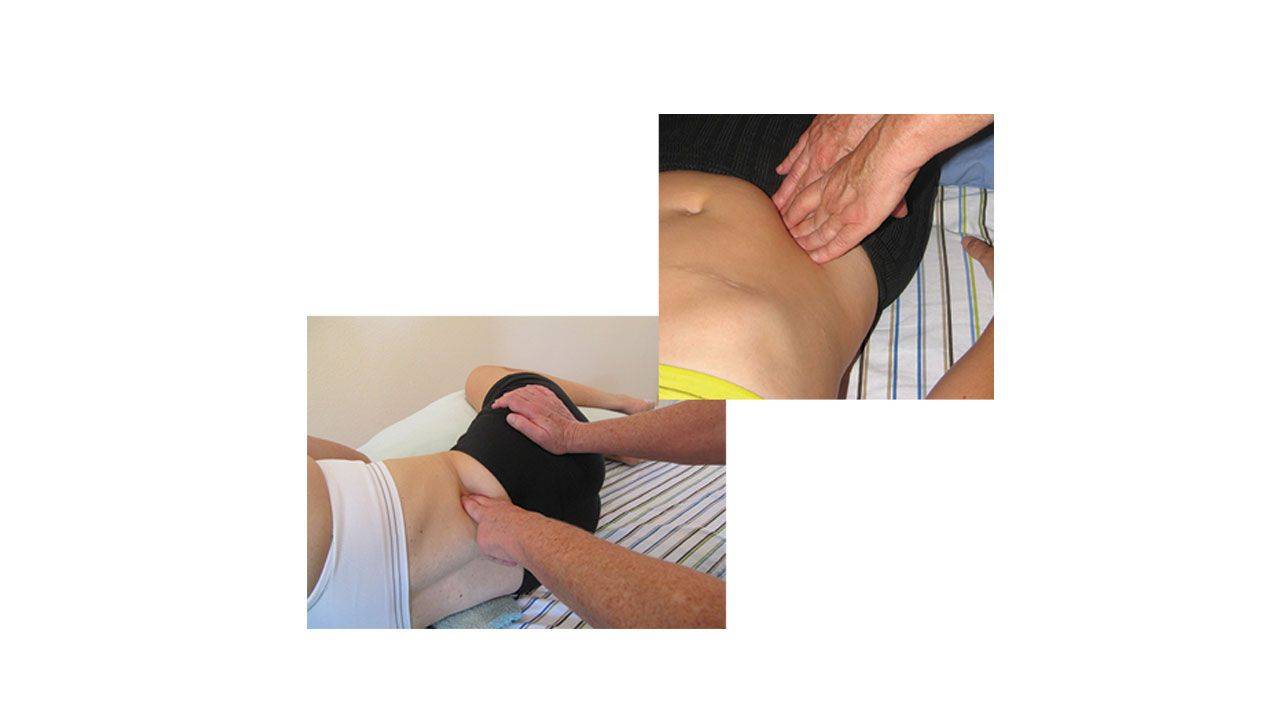
The Obstinate Pec Minor
The Obstinate Pec Minor (PMI) can produce a hailstorm of problems throughout the body especially in the shoulders, arm, neck and respiration. Working with it effectively goes a long way in helping you help your clients with neck and shoulder issues, breathing restrictions and even wrist and elbow pain. If the iliopsoas is the hidden prankster of low back pain (Travell and Simons), the PMI is the hidden trickster of the shoulder girdle.
If you found this ...
The unsung heroes of the rotator cuff!
The infraspinatus and teres minor may not always get the spotlight, but they’re the unsung heroes of the rotator cuff!
These two little muscles do an amazing job keeping your shoulder stable. In fact, they’re the only external rotators of the shoulder joint, which means they work extra hard to balance out the stronger internal rotators like the pec major, lats, teres major, anterior deltoid, and subscapularis.
When working with these muscles, a great technique to try is called "goading." This just means using strokes from the outside (lateral) to the inside (medial) to help them shorten and become more contractible.
PS- Instead of creating more strength in the internal rotators encourage your clients to do some simple exercises which strengthen the posterior thoracic and scapular stabilizers
If you found this look at the infraspinatus/teres minor helpful, remember that it’s only one piece of the shoulder puzzle. True shoulder function depends on how the entire shoulder complex work...
Palpating the slippery subscap
Subscap can be a tricky muscle to palpate and is an essential skill to have in treating shoulders. Watch the video and learn a fool-proof way of finding it!
If you found this look at the subscapularis helpful, remember that it’s only one piece of the shoulder puzzle. True shoulder function depends on how the entire shoulder complex works together.
In my Rotator Cuff Mastery course, I teach massage therapists and bodyworkers how to assess and treat the rotator cuff, scapular stabilizers, and surrounding muscles so you can create real, lasting results for your clients.
Lions And Tigers And Super-Glued Scapulae, Oh My!
Judy is a warm and generous 69 year old quilter who is coming to me for neck and shoulder issues. During the intake she told me she works with a personal trainer once a week. “That’s terrific!” I said. I’m always happy when people are committed to their self-care. I ASSUMED that her trainer had her doing scapulae stabilization exercises.
During our first session I discovered while trying to work with her subscap and serratus anterior that her scapula was so protracted and anteriorly tilted that I could barely palpate either muscle.
After our session I asked her some detailed questions about what exercises she was doing with her personal trainer. I showed her about five examples of scapulae stabilization exercises. “No, she doesn’t have me doing anything like that.” Judy said. “Ah, never assume!,” I thought to myself.
Below are some issues that arise when the scapulae are glued to the thorax:
- The scapulae are not able to glide on the thorax putting too much pressure on the shoulde ...
Stay connected with news and updates!
Author

Peggy Lamb
Author
Peggy Lamb, LMT, BCTMB, MA is the founder of Massage Publications/The Abundant Bodyworker providing resources for massage therapists with continuing education courses, books, videos and business coaching. Her coaching and course work empower LMT’s so abundance and prosperity flows into their lives. Although a bit of a "reluctant businesswoman" she nevertheless has built multiple streams of income through her various projects. Peggy brings her eclectic and extensive background into her teaching for an interesting, enjoyable and enlightening learning experience. In addition to her extensive training in massage therapy, Peggy holds a master’s degree in Dance from American University in Washington, D.C. She has volunteered for over 10 years with “Truth be Told”, teaching creative movement and writing to incarcerated women. When she’s not working, Peggy can be found dancing, swimming in Austin’s Barton Springs, hiking or even dog sledding.