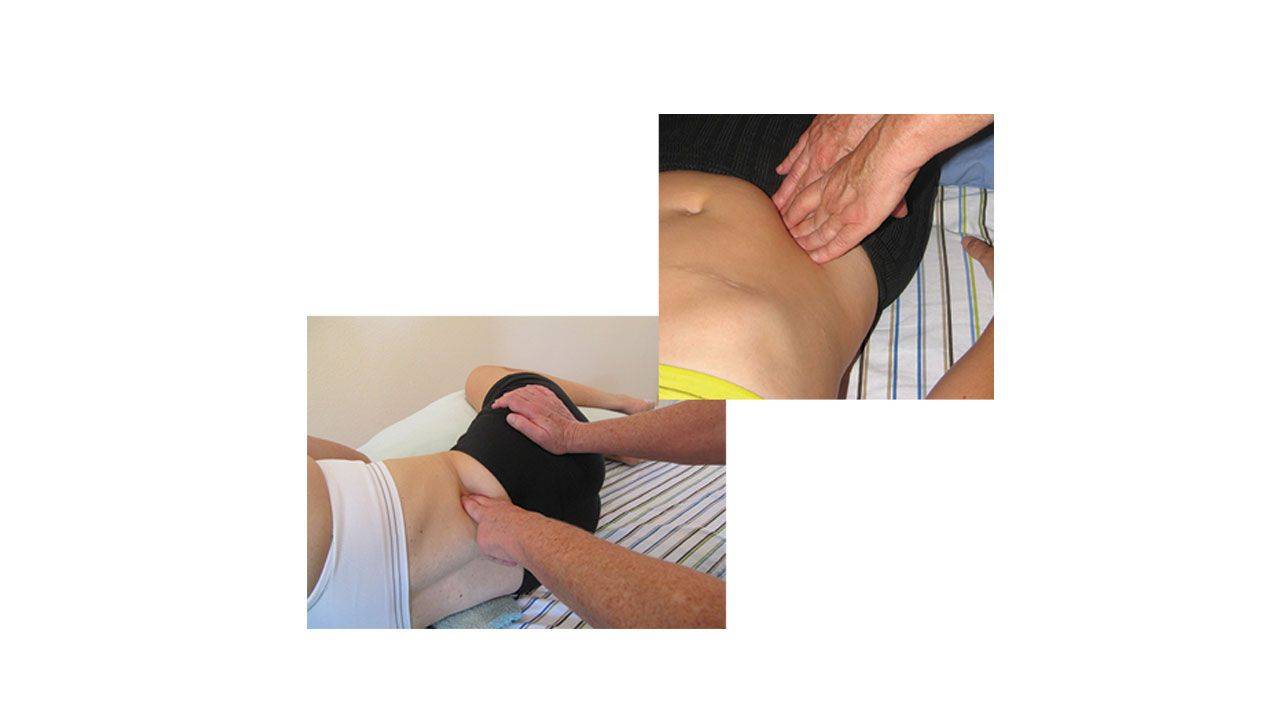
A More Effective Way to Work the QL
Have you ever worked on the quadratus lumborum and felt like you were only scratching the surface…?
The QL is one of those muscles that seems straightforward—until you try to access the deeper fibers that are actually driving a client’s pain or restriction.
A More Effective Way to Work the QL
In this video, I demonstrate the Running Man technique.
With your client in side-lying, they move their top leg through flexion and extension while you maintain contact with the QL.
This creates:
- Dynamic access to deeper fibers
- Exposure to different fiber angles
- Less need for excessive pressure
- More responsive, effective tissue work
Instead of forcing your way in…
you’re letting movement reveal the muscle.
As you watch, pay attention to:
- Hand placement
- Timing with the client’s movement
- How subtle adjustments change what you feel
Why This Works
When the client moves, the QL fibers lengthen and shorten—allowing you to feel and treat layers that are otherwise difficult to...
The delicate balance between the psoas and the piriformis

Recently, one of my students asked me to write about working with the piriformis. She had several clients experiencing piriformis syndrome and was getting frustrated with inconsistent results.
Piriformis syndrome—sometimes called piriformis dysfunction—goes by many names and is often misunderstood. I want to bring more clarity to this topic and share a broader, more effective way of looking at it.
If you’ve ever experienced it yourself, or if you treat clients with piriformis syndrome or sciatica, you know how intense it can be. It’s deeply painful and often creates wide-ranging referred pain. That’s why understanding this muscle in isolation isn’t enough—we need to see the full ecosystem.
Let’s start with the role of the piriformis then we’ll go around the corner to the psoas:
Piriformis acts as an external rotator of the hip and, in certain positions, becomes an internal rotator. It is extremely sensitive to anything happening around the sacroiliac (SI) joint because it attaches ...
Stay connected with news and updates!
Author

Peggy Lamb
Author
Peggy Lamb, LMT, BCTMB, MA is the founder of Massage Publications/The Abundant Bodyworker providing resources for massage therapists with continuing education courses, books, videos and business coaching. Her coaching and course work empower LMT’s so abundance and prosperity flows into their lives. Although a bit of a "reluctant businesswoman" she nevertheless has built multiple streams of income through her various projects. Peggy brings her eclectic and extensive background into her teaching for an interesting, enjoyable and enlightening learning experience. In addition to her extensive training in massage therapy, Peggy holds a master’s degree in Dance from American University in Washington, D.C. She has volunteered for over 10 years with “Truth be Told”, teaching creative movement and writing to incarcerated women. When she’s not working, Peggy can be found dancing, swimming in Austin’s Barton Springs, hiking or even dog sledding.