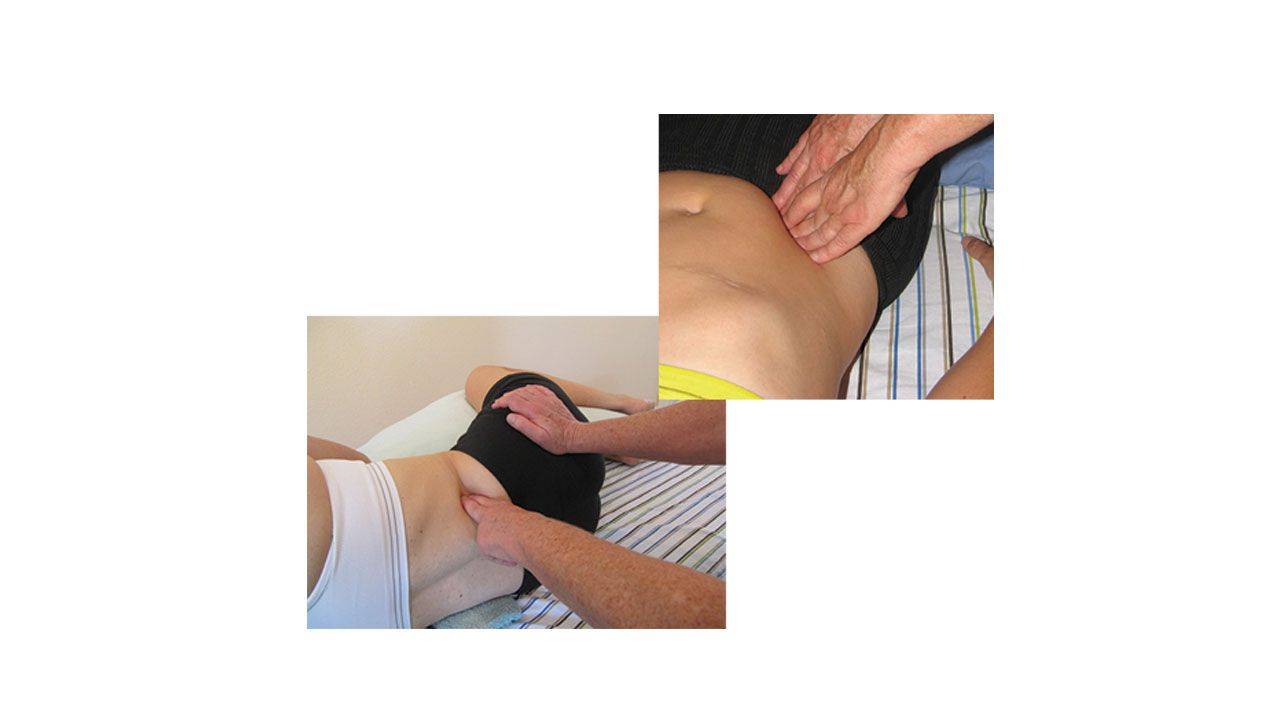
Finding Your Body's Mind
“The mind is like the wind; the body is like the sand. If you want to know which way the wind is blowing, watch the sand.” (Bonnie Bainbridge Cohen)
Even when we are still, we are moving. Blood circulates, lymph flows, the heart beats, stomach juices swirl, cerebral spinal fluid pulses, cells migrate, rib case and lungs expand and contract. There is a universe of silent movement occurring inside us every second. There is no conscious effort to these movements. We do not have to decide to digest my food. If we eat something our digestive systems, governed by our brain, takes care of it.
In contrast to these involuntary movements are the movements we decide to do, or voluntary movements. Voluntary movement is active; it requires consciousness, intent and will. When we decide to brush our teeth we must first have the intent and the will to perform that activity before we can reach out with our hand to grasp the toothbrush, put toothpaste on the brush and bring it to our mouths.
...
Interoception and Bodywork: Helping Clients Learn to Listen to Their Bodies
I remember a client I worked with years ago who had very little awareness of what was happening inside his body—or even where his body was in space.
In other words, both his interoception and proprioception were limited.
At one point, I gave him a very simple exercise: lie on the floor with his arms out to his sides.
I demonstrated it several times. I explained verbally—and even in writing—that the purpose was to gently create length across his chest, allow more freedom in his breathing, and encourage external rotation at the shoulder joints.
And still, the exercise remained somewhat mysterious to him.
At the time, I didn't understand something I understand much better now:
I was asking him to notice sensations he may not have learned how to notice. I was giving him the exercise, but I wasn't helping him develop the internal awareness that would allow him to experience the exercise differently. This internal awareness is the powerful and often overlooked interoception.
What Is Interoceptio...
To touch the surface is to stir the depth

One of the things that has fascinated me throughout my career is how profoundly touch can influence the human experience.
As bodyworkers, we often focus on muscles, fascia, joints, and movement patterns. But beneath all of that lies something even more remarkable: the intimate relationship between touch and the nervous system.
Every time we place our hands on a client, we're doing much more than working with tissue. We're communicating with a system that is constantly gathering information, assessing safety, and shaping how a person experiences their body.
The following passage from Dean Juhan's classic book *Job's Body* beautifully captures this relationship. It's one of my favorite descriptions of why touch matters—and why our work can have such a profound impact.
"The close association between the skin, where touch happens, and the central nervous system could not have more concrete anatomical and physiological connections. Skin and brain develop from exactly the same primitive ...
Chronic Pain and the Brain
As bodyworkers we all treat people in pain and most of the time successfully. But what if your client has had pain for more than 3-6 months and is not responding to your or any other treatments?
It’s possible that it’s neuroplastic pain (also known as neural circuit pain, central sensitization, TMS (tension myoneural syndrome)
Neuroplastic pain results from the brain misinterpreting safe messages from the body as if they were dangerous. In other words, neuroplastic pain is a false alarm. Though the pain can be addressed through various practices, this does not imply that the pain is imaginary. The pain is REAL!
“The relationship between pain and the state of the tissues becomes weaker as pain persists” Dr. Lorimer Moseley
In other words the longer the pain persists the higher the chance it’s being caused by the brain and nervous system. Without the brain there is no pain.
Neuroplastic pain is caused by a brain/nervous system which has gotten stuck in sympathetic arousal – fight, ...
Stay connected with news and updates!
Author

Peggy Lamb
Author
Peggy Lamb, LMT, BCTMB, MA is the founder of Massage Publications/The Abundant Bodyworker providing resources for massage therapists with continuing education courses, books, videos and business coaching. Her coaching and course work empower LMT’s so abundance and prosperity flows into their lives. Although a bit of a "reluctant businesswoman" she nevertheless has built multiple streams of income through her various projects. Peggy brings her eclectic and extensive background into her teaching for an interesting, enjoyable and enlightening learning experience. In addition to her extensive training in massage therapy, Peggy holds a master’s degree in Dance from American University in Washington, D.C. She has volunteered for over 10 years with “Truth be Told”, teaching creative movement and writing to incarcerated women. When she’s not working, Peggy can be found dancing, swimming in Austin’s Barton Springs, hiking or even dog sledding.