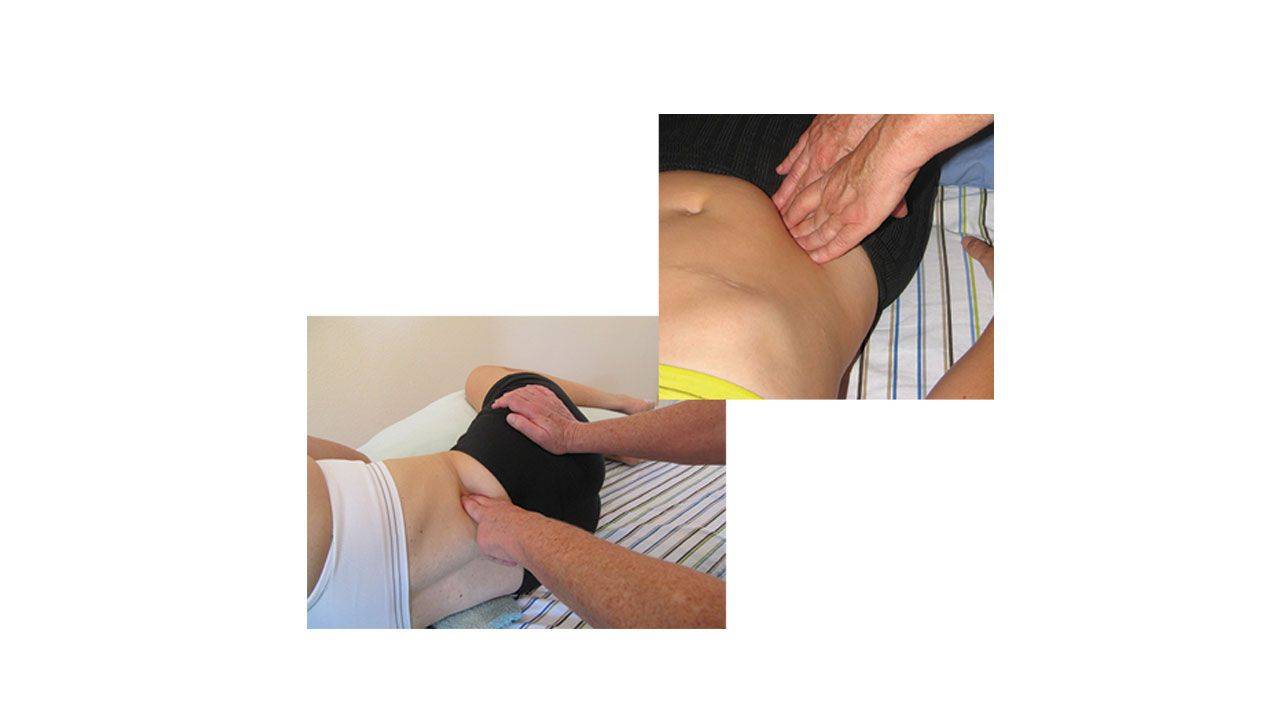
Interoception and Bodywork: Helping Clients Learn to Listen to Their Bodies

I remember a client I worked with years ago who had very little awareness of what was happening inside his body—or even where his body was in space.
In other words, both his interoception and proprioception were limited.
At one point, I gave him a very simple exercise: lie on the floor with his arms out to his sides.
I demonstrated it several times. I explained verbally—and even in writing—that the purpose was to gently create length across his chest, allow more freedom in his breathing, and encourage external rotation at the shoulder joints.
And still, the exercise remained somewhat mysterious to him.
At the time, I didn't understand something I understand much better now:
I was asking him to notice sensations he may not have learned how to notice. I was giving him the exercise, but I wasn't helping him develop the internal awareness that would allow him to experience the exercise differently. This internal awareness is the powerful and often overlooked interoception.
What Is Interoception?
Interoception is our ability to sense and interpret signals coming from inside the body.
It includes sensations such as:
• the rhythm of your breathing
• your heartbeat
• hunger or thirst
• temperature
• pressure
• muscle tension
• fullness
• the need to use the bathroom
• and many of the subtle sensations that tell us something is changing inside us
When I ask a client, “What are you feeling?” I’m not asking about emotion.
I'm simply asking:
- Can you feel the back of your heel against the table?
- Can you notice your breath moving your ribs?
- Can you feel the weight of your pelvis?
- Does one shoulder feel different from the other?
- Can you notice what changes when you move your arm?
These may sound like very simple questions. But for some clients, they aren't simple at all.
“What If I Can't Feel Anything?”
In my experience, there are two broad categories of clients who have difficulty sensing what's happening inside their bodies.
The first group simply hasn't been asked to pay attention. They may come to you for massage and leave feeling better. They may see a chiropractor, get an adjustment and feel better. They may go to an acupuncturist or use balls and foam rollers for self-myofascial work.
They know something changed. But they may have very little vocabulary for describing what changed. Somatic awareness is a learned skill, and many people simply haven't been taught it.
So when you suddenly ask:
“What are you feeling?”
They may freeze. They may think it's a test. They may start searching for the answer they think you want. And that anxiety can take them even farther away from sensing what is actually happening.
This isn't a deficiency. It is simply a literacy issue. They haven't learned the language of sensation yet.
Our job isn't to demand the “right” answer. It's to help clients become curious.
“There isn't a right answer. Just notice what you notice.” That one sentence can change the entire experience.
The Client Who Doesn't Have the Bandwidth to Notice
There's another group of clients who may have difficulty turning their attention inward.
They simply may not have much bandwidth available for it at that moment.
Their nervous system may be highly activated. They may be stressed, overwhelmed, distracted, or accustomed to staying focused on what's happening around them rather than what's happening inside them.
That doesn't mean they can't develop interoceptive awareness. It does mean we shouldn't force it.
Instead, we can offer very gentle invitations to notice something simple and neutral:
- Can you feel your feet?
- Can you notice where your body makes contact with the table?
- Without changing it, can you notice your breathing?
And importantly, we can give clients permission not to go inward if that doesn't feel comfortable or useful. The goal isn't perfect body awareness. The goal is simply to increase the awareness that's available.
What I Learned Working With Women in Prison
About a year ago, I began experimenting more intentionally with interoceptive awareness in my work with women in prison.
Prisons are environments in which people often have very good reasons to stay alert to what's happening around them. So I was cautious.
I didn't want to assume that directing someone's attention inward would automatically be calming or appropriate. But these women know me. We'd been working together for years, and within the context of our class, we had developed deep trust.
I created a very simple practice. I asked them to notice their breathing. Not deepen it. Not slow it down. Not “take a deep breath.”
Just notice it. "What is your breath doing right now?"
Then I gradually guided their attention to different parts of their bodies. It was beautiful to watch.
For many of the women, there was a shift from outward vigilance toward more internal settling and awareness.
That experience reinforced something important for me:
Even if the person is highly activated/stressed, a simple guided "notice your sensations" practice is valuable.
Why Does This Matter in Bodywork?
As massage therapists and bodyworkers, we're very good at feeling other people's bodies.
We feel the difference between tissue that yields and tissue that doesn't. We notice movement restrictions. We palpate tone, texture, temperature and asymmetry. We observe breathing and movement.
But what is the client experiencing? That's an entirely different piece of the puzzle.
A client may have only a tiny amount of internal awareness. Another may have much more.
It doesn't really matter whether they're starting with a teaspoonful or a cupful. We begin with what's available.
Then we gently help them develop it.
This is also where our understanding of anatomy and pain science becomes so important.
A sensation isn't automatically proof that a muscle is “tight,” damaged or needs to be released. Pain isn't simply a measurement of tissue dysfunction. The nervous system is constantly receiving information, interpreting it, and deciding what matters.
The more we understand that process, the better questions we can ask—and the less likely we are to impose our own interpretation onto what a client is feeling.
Want to go deeper into this?
In Mastering the Iliopsoas & Quadratus Lumborum: The Clinical Foundation — Anatomy, Pain Science & Real-World Application
I explore this bigger clinical picture: how anatomy, movement, pain and the nervous system come together when you're working with real people on your table.
Because knowing where the iliopsoas or QL is located is only the beginning. The more interesting question is:
Why is this client's nervous system responding the way it is—and what does that mean for how I work?
If you're interested in becoming a more thoughtful clinical bodyworker rather than simply collecting more techniques, this master class is a great next step.
Interoception Can Change the Way We Approach the Shoulder, Too
Think about the client with shoulder pain. We can palpate their rotator cuff. We can work the subscapularis. We can release the pecs.
But what happens when we ask the client to participate in noticing?
- What happens when you slowly raise your arm?
- Where do you first notice effort?
- What changes if you move more slowly?
- Can you feel your shoulder blade moving?
- Does this movement feel easier, harder or simply different after the work?
Now the session becomes more than something we're doing to the client. We're helping the client gather information about their own body.
And that can be incredibly valuable when we're dealing with complex areas like the shoulder, where anatomy, biomechanics, the nervous system and movement strategy all interact.
Want to understand the shoulder beyond “tight muscles”?
My master class The Functional Shoulder: What Every Bodyworker Should Know was created to help massage therapists understand what's actually happening underneath their hands.
You'll explore the rotator cuff, scapular mechanics, shoulder function and clinical reasoning so you're not simply chasing the spot that hurts. It's about learning to see—and treat—the shoulder as part of a functioning system.
What About the Client Who Needs to Talk?
I have a few clients who really need to talk during their sessions.
Talking helps them settle. I don't try to take that away from them. I let them talk. Let them vent.
Let the beginning of the session be what they need it to be.
Then, when it seems appropriate, gently bring their attention back into their body.
You don't have to announce: “NOW WE'RE DOING INTEROCEPTION!”
Just ask:
“Can you notice what happens under my hand here?”
Or:
“Before I move your arm again, notice how it feels resting on the table.”
Or:
“Take a moment and notice whether anything feels different from when we started.”
That's enough.
Interoception Isn't Another Technique
This may be the most important point. Interoception isn't something we do to our clients.
It's something we help them discover. We're not teaching them what they're supposed to feel.
We're helping them become more curious about what they actually feel.
That awareness may eventually extend far beyond the massage table.
A person might notice that they're holding their breath when they're stressed.
They might recognize that their shoulders rise every time they open their email.
They may become aware that they're clenching their jaw.
They might notice tension in their gut around a particular situation and become curious about what that signal means for them.
They may begin noticing fatigue earlier instead of pushing through it.
They may recognize the difference between a movement that feels threatening and one that feels challenging but manageable.
Awareness creates information. And information creates choices.
Simple Interoception Prompts for Your Sessions
You don't need a complicated script. Try inviting your client to notice:
Breath
• Can you notice your breathing without changing it?
• Where do you feel movement as you breathe?
• Does the inhale feel different from the exhale?
Contact
• Can you feel your feet against the floor?
• Where does your body make contact with the table?
• Can you notice the weight of your head against the headrest?
Temperature
• Do you notice warmth or coolness anywhere?
• Does one area feel warmer than another?
Internal sensations
• Can you notice your heartbeat?
• Are you aware of hunger or thirst?
• Can you notice any areas of tension, ease, pressure or movement?
Movement
Invite the client to slowly:
• make a fist and release it
• wiggle the toes
• blink
• open and close the mouth
• gently move the head
• raise and lower an arm
• move a shoulder
• notice what happens before, during and after a movement
And remember:There is no right answer. If the client says, “I don't feel anything,” that's information too.You might simply respond: “That's okay. Just notice that.”
From Fixing Bodies to Helping People Experience Their Bodies
The longer I do this work, the more interested I become in the space between what I feel as a therapist and what my client experiences.
Our hands matter. Our knowledge of anatomy matters. Our techniques matter. But so does the client's nervous system. So does movement. So does perception. And so does their ability to notice what's happening inside their own body.
We don't need to demand awareness or force it. Our clients don't need to be expert body scanners.
We simply begin with whatever awareness is available. A teaspoonful is enough.
And from there, we water it and help it grow.
Stay connected with news and updates!
Author

Peggy Lamb
Author
Peggy Lamb, LMT, BCTMB, MA is the founder of Massage Publications/The Abundant Bodyworker providing resources for massage therapists with continuing education courses, books, videos and business coaching. Her coaching and course work empower LMT’s so abundance and prosperity flows into their lives. Although a bit of a "reluctant businesswoman" she nevertheless has built multiple streams of income through her various projects. Peggy brings her eclectic and extensive background into her teaching for an interesting, enjoyable and enlightening learning experience. In addition to her extensive training in massage therapy, Peggy holds a master’s degree in Dance from American University in Washington, D.C. She has volunteered for over 10 years with “Truth be Told”, teaching creative movement and writing to incarcerated women. When she’s not working, Peggy can be found dancing, swimming in Austin’s Barton Springs, hiking or even dog sledding.