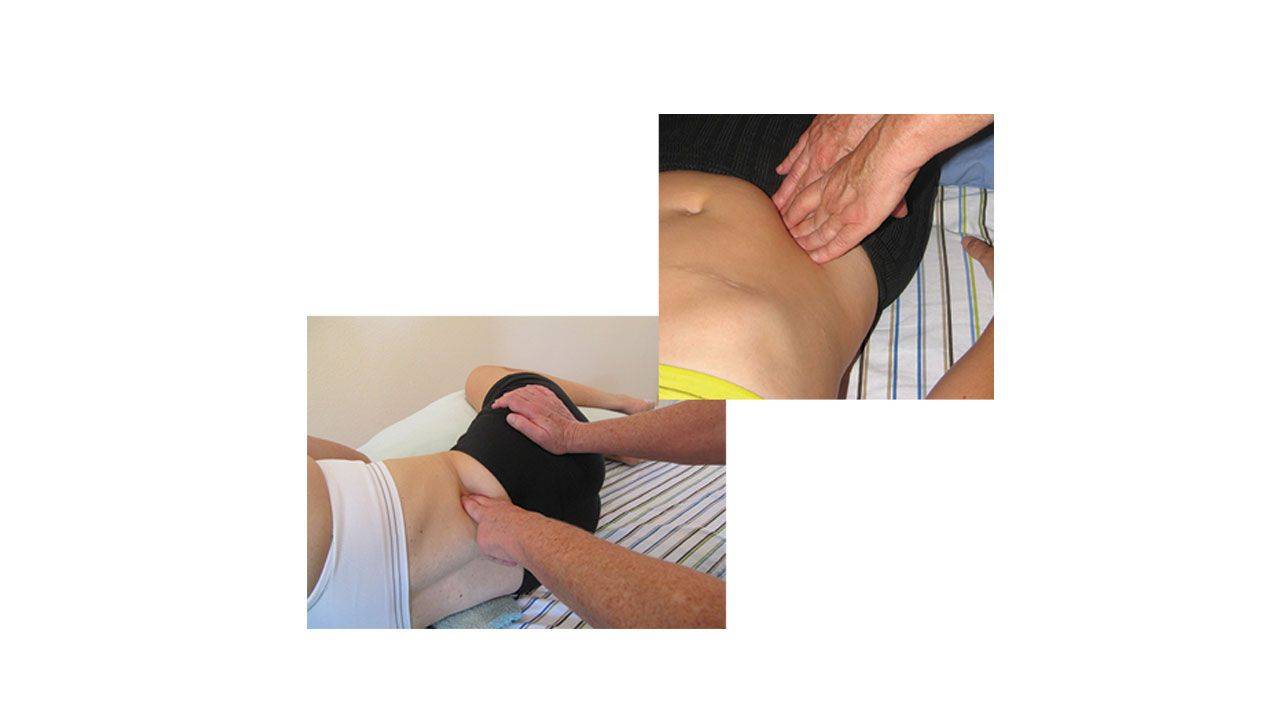
Hooked on the symmetry?
Are you hooked on the drug of symmetry?
So many bodyworkers, yoga practitioners, Pilates teachers, dancers, and students have been taught that the goal is symmetry—that the body should be even, balanced, perfectly aligned.
But watch a baby.
They don’t lie there in pristine alignment. One leg bends, the other extends. They twist, shift, explore. There’s nothing symmetrical about how they organize themselves—and yet, everything about it is intelligent.
And still… many of us (myself included, earlier in my career) have worshipped at the altar of symmetry. We’ve chased it as the solution for pain, for better movement, for improved performance. I’ve taught courses, written a book, and created programs focused on correcting core misalignments—and I stand by that work.
But it’s not the whole story.
Over time, I’ve come to see “misalignment” through a different lens:
as the body’s wisdom—its way of creating the adaptations and limitations it needs in order to function.
Take Usain Bolt.
Eight-time Olympic gold medalist. Fastest human in history. And he has structural scoliosis—present from birth. His spinal curvature contributes to a leg length difference of about half an inch, creating an asymmetrical stride.
By the logic of perfect symmetry… he shouldn’t perform the way he does.
And yet—he does.
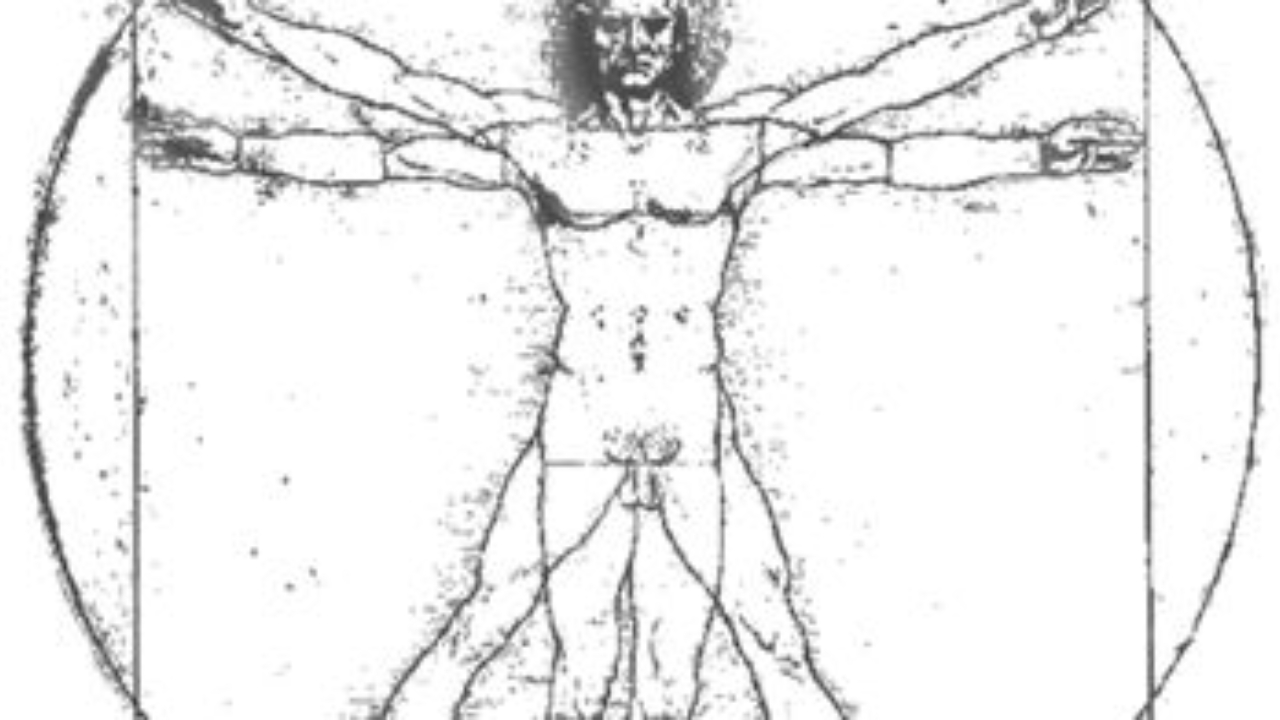
I remember attending a workshop years ago where the morning session was rooted in the idea that all asymmetries should be corrected—think Vitruvian Man as the gold standard.
Then the afternoon flipped that idea on its head, drawing from the work of Judith Aston. Her perspective? Asymmetry is natural. The goal isn’t to force the body into symmetry, but to help it function coherently—so the whole system is working with itself.
That contrast has stayed with me.
Just the other day, a new client came in with a list of “problems” to fix: uneven shoulders, a tilted neck, visible asymmetries she wanted corrected.
But what I saw was a body that had already made intelligent choices.
Yes—we can improve communication, reduce unnecessary tension, and create more ease and flow.
But chasing perfect symmetry?
That’s often where we lose the plot.
Sometimes the work isn’t about forcing the body into an ideal.
It’s about listening to what it’s already doing… and refining that.
So I’m curious—
Which camp do you fall into?
If this shifted how you think about alignment and asymmetry, you’ll love my Stabilizing the Core & SI Joint DVD or streaming videos. It bridges the gap between “fixing” the body and working with its intelligence—so you can create stability, reduce pain, and get lasting results without forcing symmetry. Learn how to support the core and SI joint in a way that respects real-world movement—because better outcomes come from better understanding, not rigid ideals.
DVD on sale now for only $15
Prefer streaming videos? No problem – only $40 and lifetime access
Stay connected with news and updates!
Author

Peggy Lamb
Author
Peggy Lamb, LMT, BCTMB, MA is the founder of Massage Publications/The Abundant Bodyworker providing resources for massage therapists with continuing education courses, books, videos and business coaching. Her coaching and course work empower LMT’s so abundance and prosperity flows into their lives. Although a bit of a "reluctant businesswoman" she nevertheless has built multiple streams of income through her various projects. Peggy brings her eclectic and extensive background into her teaching for an interesting, enjoyable and enlightening learning experience. In addition to her extensive training in massage therapy, Peggy holds a master’s degree in Dance from American University in Washington, D.C. She has volunteered for over 10 years with “Truth be Told”, teaching creative movement and writing to incarcerated women. When she’s not working, Peggy can be found dancing, swimming in Austin’s Barton Springs, hiking or even dog sledding.