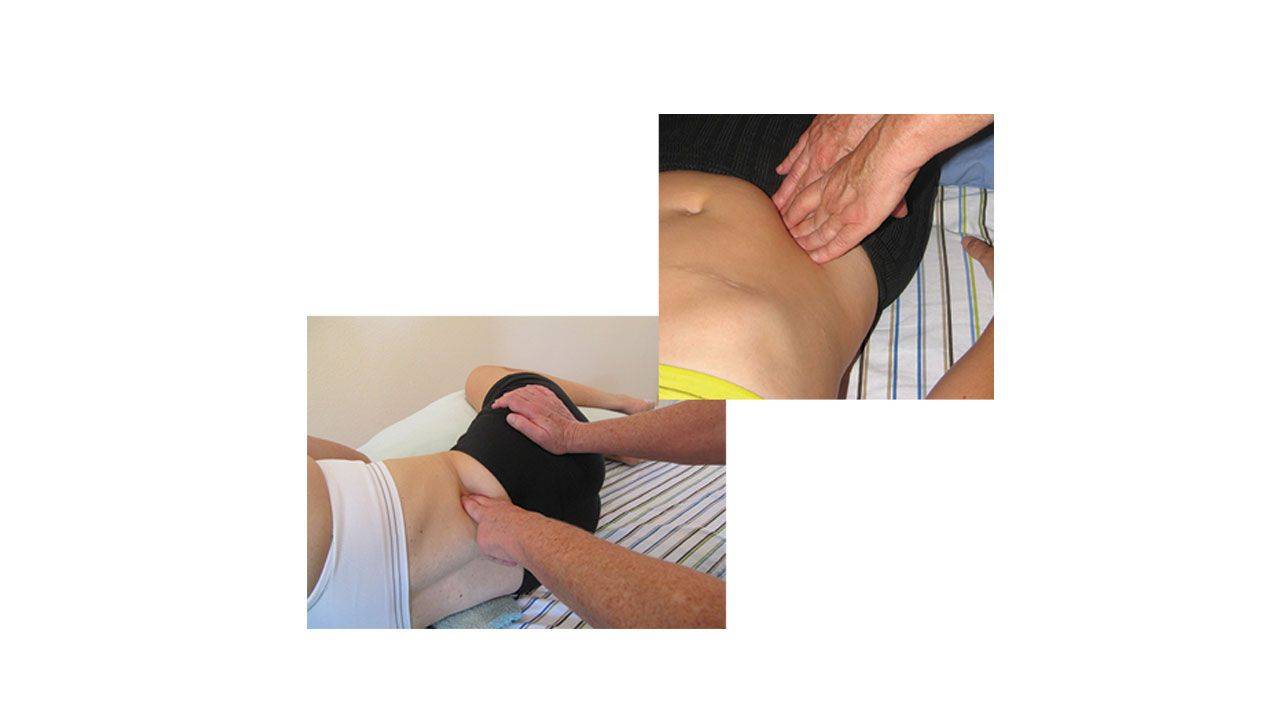
A Yummy Low Back Stretch Your Clients Will Love
Why this stretch works
This supine stretch targets the spinal erectors , the rotatores , the gluteus maximus , and the hamstrings . It feels restorative for clients, integrates smoothly into a Swedish massage, and is especially effective when used near the end of supine work. The movement combines spinal flexion, rotation, and thigh flexion to create a broad, safe stretch across the low back and posterior chain.
Indications and precautions
• Good for: clients with mild to moderate lower back tightness, tight glutes, or hamstrings.
• Avoid or modify if: client has acute low back pain, recent spinal surgery, severe sciatica, or unstable hips.
• Communicate: always check with the client about comfort, ask them to tell you if they feel nerve pain, sharp pain, or anything unusual.
Setup and client positioning
Have the client lie supine with their legs extended. I like to do this toward the end of supine work, when the body is already warmed up and ready for a deeper, longer-hold stretch.
Step-by-step technique
1. Start with traction: hold the ankles and apply gentle traction to the legs to unload the lumbar spine. This creates space and makes the subsequent rotation and flexion safer.
2. Walk the legs around the table: rotate the legs as a unit toward one side of the table, then stack one leg on top of the other so the knees are piled. Keep the traction while you reposition.
3. Cradle the legs: support the piled legs in your hands or forearms. Maintain traction and keep the client’s shoulders flat on the table so rotation occurs through the spine, not by lifting the torso. Ask the client to hold the table if needed to keep their shoulders down.
4. Find the physiological barrier: slowly walk the legs up toward the chest, feeling for the natural end range — the physiological barrier. Gently go slightly beyond this point into the stretch zone.
5. Add traction with the other hand: a subtle, sustained traction with your free hand amplifies the decompressive effect and deepens the stretch.
6. Modify for hamstring sensitivity: if the client reports too much hamstring tension, ask them to bend the knee to reduce hamstring stretch while still achieving spinal rotation and glute release.
7. Use your torso, not just your arms: press the legs up using your body weight and torso. This is much easier on your body and gives a smoother, controlled pressure—useful even with larger clients.
8. Return slowly: when finished, bring the legs back to the center gradually rather than releasing quickly.
Draping method
To keep the client covered while performing this stretch, use the fitted sheet or drape like this:
• Undrape only the feet.
• Wrap the fitted sheet around the ankles and feet so the sheet holds them securely.
• Apply traction and walk the legs around the table, pile them, cradle, and traction as before.
• The sheet should remain in place, preserving modesty while allowing you to work freely.
Practical tips and cues
• Keep shoulders flat: this focuses the rotation through the lumbar spine rather than the thorax.
• Ask for a table-hold: a simple cue like “hold the table with your left hand” helps keep the shoulder grounded.
• Breathe with the client: encourage slow, full breaths to help the muscles relax into the stretch.
• Monitor the stretch quality: look for a slowening of tissue resistance, softening around the glutes, and a calm facial expression from the client.
• Body mechanics: use your legs and torso to generate movement and pressure—this protects your shoulders and wrists.
Common mistakes to avoid
• Forcing range beyond the client’s comfort or into sharp pain.
• Allowing the client’s shoulders to lift, which shifts the stress away from the target tissues.
• Using only arm strength rather than body weight to move the legs.
• Neglecting to drape properly, which can make the client feel exposed and tense.
Quick summary
This supine stretch is a versatile addition to any bodywork session which safely mobilizes the lumbar spine, glutes, and hamstrings. Use traction, controlled rotation, and careful cradling of the legs while keeping the client’s shoulders down. With simple draping and minor modifications, it fits seamlessly into your routine and offers a satisfying release that clients love.
“I use the stretches from your videos all the time and get immediate positive feedback!” Elizabeth Null, LMT
Want more stretches like this one—plus clear guidance on when, why, and how to use them with real clients?
Grab the Stretch Your Clients eBook (only $15) and build a go-to stretching toolkit you’ll use every week. You’ll also have the option to upgrade to the streaming videos so you can see each stretch in action and feel confident using it right away.
Prefer a spiral bound book that you can highlight with important information? Go here
Stay connected with news and updates!
Author

Peggy Lamb
Author
Peggy Lamb, LMT, BCTMB, MA is the founder of Massage Publications/The Abundant Bodyworker providing resources for massage therapists with continuing education courses, books, videos and business coaching. Her coaching and course work empower LMT’s so abundance and prosperity flows into their lives. Although a bit of a "reluctant businesswoman" she nevertheless has built multiple streams of income through her various projects. Peggy brings her eclectic and extensive background into her teaching for an interesting, enjoyable and enlightening learning experience. In addition to her extensive training in massage therapy, Peggy holds a master’s degree in Dance from American University in Washington, D.C. She has volunteered for over 10 years with “Truth be Told”, teaching creative movement and writing to incarcerated women. When she’s not working, Peggy can be found dancing, swimming in Austin’s Barton Springs, hiking or even dog sledding.